

How Organizations Access Critical Traffic Data
Network tapping is a foundational technology for achieving complete network visibility in modern IT environments. As organizations continue adopting hybrid cloud architectures, AI workloads, distributed applications, and advanced cybersecurity monitoring strategies, gaining reliable access to network traffic has become more important than ever.
Without proper visibility into network communications, security teams, network engineers, and operations teams may struggle to identify performance issues, investigate threats, troubleshoot applications, and maintain compliance. This is where network tapping plays a critical role.
By providing direct and uninterrupted access to network traffic, network tapping enables organizations to collect packet-level data for packet capture, traffic analysis, network monitoring, Deep Observability, cybersecurity monitoring, and traffic intelligence initiatives.
What is Network Tapping?
Network tapping is the process of accessing and copying network traffic using a Network TAP (Test Access Point) to provide monitoring, security, and observability tools with complete visibility into network communications.
Unlike other traffic collection methods, network tapping provides direct access to network packets without interfering with production traffic.
Organizations use network tapping to support:
- Network visibility
- Packet capture
- Traffic monitoring
- Deep Observability
- Cybersecurity monitoring
- Network forensics
- Traffic intelligence
- Application performance monitoring
Network tapping allows organizations to monitor network activity accurately while maintaining network reliability and performance.
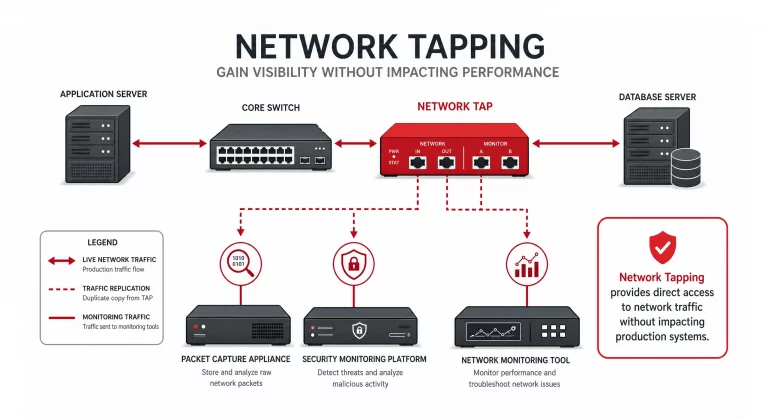
Diagram 1 : Network Tapping
Why is Network Tapping Important?
Modern enterprise environments generate massive amounts of network traffic across:
- Data centers
- Hybrid cloud environments
- Multi-cloud deployments
- AI infrastructure
- Kubernetes clusters
- Virtualized environments
- Distributed applications
As networks become increasingly complex, visibility gaps can develop, making it difficult to monitor performance, investigate incidents, and detect cybersecurity threats.
Network tapping helps eliminate these blind spots by providing complete access to network traffic.
Organizations implementing network tapping gain:
- Improved network visibility
- Better cybersecurity monitoring
- Faster troubleshooting
- Enhanced packet analysis
- Stronger compliance capabilities
- Improved traffic intelligence
Network tapping serves as a critical foundation for modern observability architectures.
How Does Network Tapping Work?
A Network TAP is installed directly into the network path between connected devices.
When traffic passes through the network connection, the TAP creates an exact copy of every packet and sends that traffic to monitoring and security tools.
The production traffic continues uninterrupted while monitoring systems receive complete packet visibility.
A typical network tapping architecture includes:
Network TAPs
Provide direct packet access.
Packet Brokers
Aggregate, filter, optimize, and distribute traffic.
Packet Capture Appliances
Store and analyze packet data.
Security Monitoring Platforms
Detect threats and investigate suspicious activity.
Deep Observability Platforms
Generate actionable insights from packet-level traffic data.
This architecture ensures organizations can monitor traffic without affecting network performance.
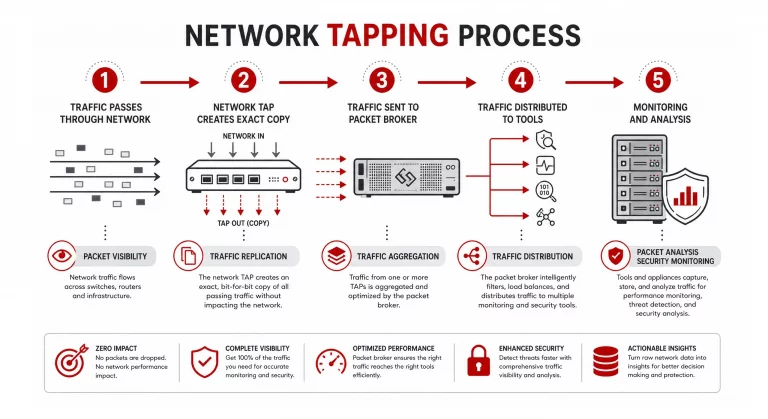
Diagram 2 : Network Tapping Process
Network Tapping vs Port Mirroring
One of the most common questions organizations ask is whether network tapping or port mirroring provides better visibility.
Network Tapping | Port Mirroring |
Captures all packets | May drop packets |
Passive monitoring | Switch-dependent |
No impact on production traffic | Can impact switch performance |
Reliable packet visibility | Potential visibility gaps |
Supports high-speed networks | Limited scalability |
Preferred for security monitoring | Often used for basic monitoring |
While port mirroring may be suitable for certain environments, network tapping is generally considered the preferred approach for organizations requiring reliable network visibility and packet-level monitoring.
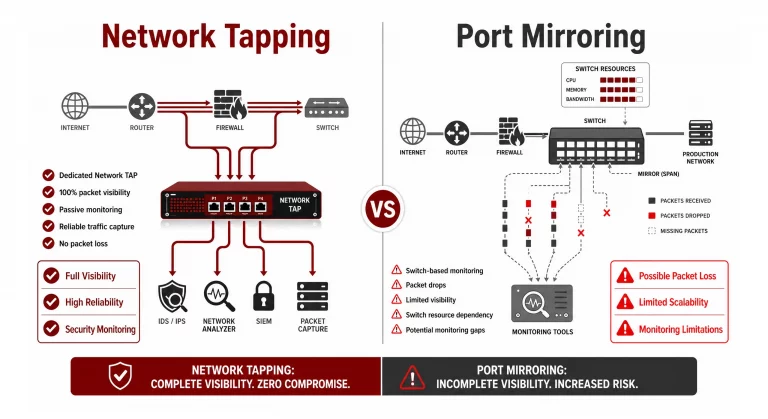
Diagram 3 : Network Tapping vs Port Mirroring
Benefits of Network Tapping
Complete Network Visibility
Network tapping provides direct access to network communications across physical, virtual, and cloud environments.
Organizations gain visibility into:
- Application traffic
- User communications
- Server interactions
- East-west traffic
- North-south traffic
- Cloud workloads
- AI infrastructure traffic
Complete visibility allows teams to understand network behavior with greater accuracy.
Improved Packet Capture
Packet capture solutions depend on accurate traffic collection.
Network tapping ensures packet capture systems receive:
- Complete packet streams
- Accurate packet timestamps
- Reliable packet visibility
- High-speed traffic access
This improves packet analysis and network troubleshooting capabilities.
Enhanced Cybersecurity Monitoring
Cybersecurity teams rely on packet-level visibility to identify threats and investigate incidents.
Network tapping supports:
- Threat detection
- Malware investigation
- Network forensics
- Incident response
- Lateral movement detection
- East-west traffic analysis
By providing complete traffic visibility, network tapping helps security teams detect malicious activity that may otherwise go unnoticed.
Better Network Performance Monitoring
Performance issues often originate within network communications.
Network tapping enables teams to monitor:
- Application latency
- Packet loss
- Retransmissions
- Traffic bottlenecks
- Service dependencies
This visibility accelerates root-cause analysis and improves operational efficiency.
Supports Deep Observability
Deep Observability depends on high-quality packet-level traffic data.
Network tapping provides the traffic visibility required for:
- Traffic intelligence
- Network visibility
- Packet analytics
- Cloud visibility
- Hybrid cloud monitoring
- AI observability
Organizations pursuing Deep Observability strategies frequently deploy network tapping solutions as a foundational component of their observability architecture.
Where is Network Tapping Used?
Enterprise Networks
Large organizations use network tapping to improve visibility across critical infrastructure.
Security Operations Centers (SOC)
SOC teams use network tapping to support cybersecurity monitoring and threat detection.
Data Centers
Network tapping enables monitoring of high-speed traffic across enterprise data center environments.
Hybrid Cloud Environments
Organizations use network tapping to maintain visibility as workloads move between on-premises and cloud environments.
Financial Services
Financial institutions use network tapping for compliance, security monitoring, and performance analysis.
Government Networks
Government organizations deploy network tapping to improve visibility and support security operations.
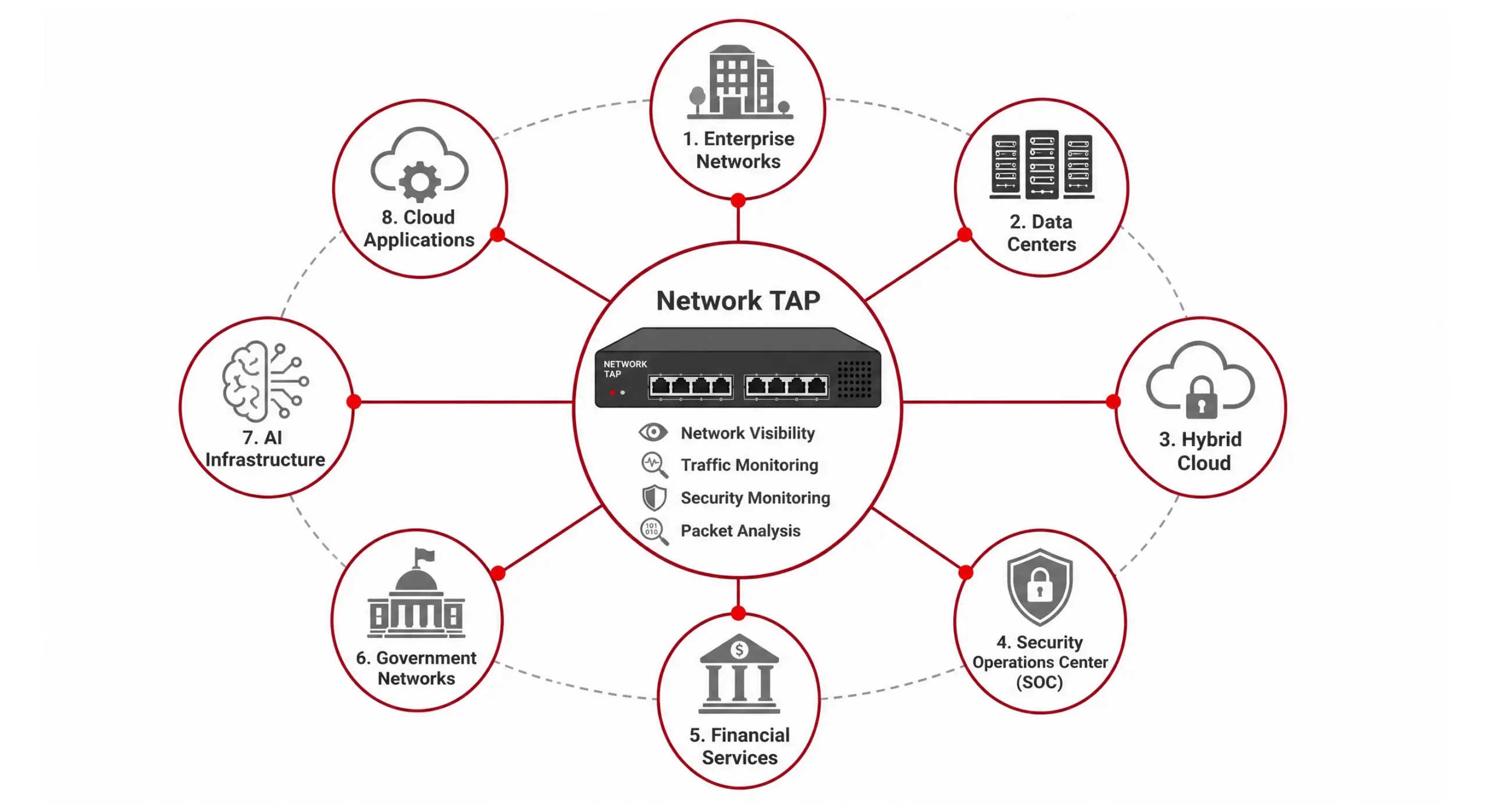
Diagram 4 : Network Tapping Visibility
Network Tapping and Packet Capture
Network tapping and packet capture work together to provide comprehensive network visibility.
Network tapping provides access to traffic.
Packet capture systems record and store the traffic.
Together they support:
- Historical traffic analysis
- Threat investigations
- Compliance monitoring
- Network troubleshooting
- Deep packet analysis
Without reliable traffic access, packet capture solutions may miss critical network activity.
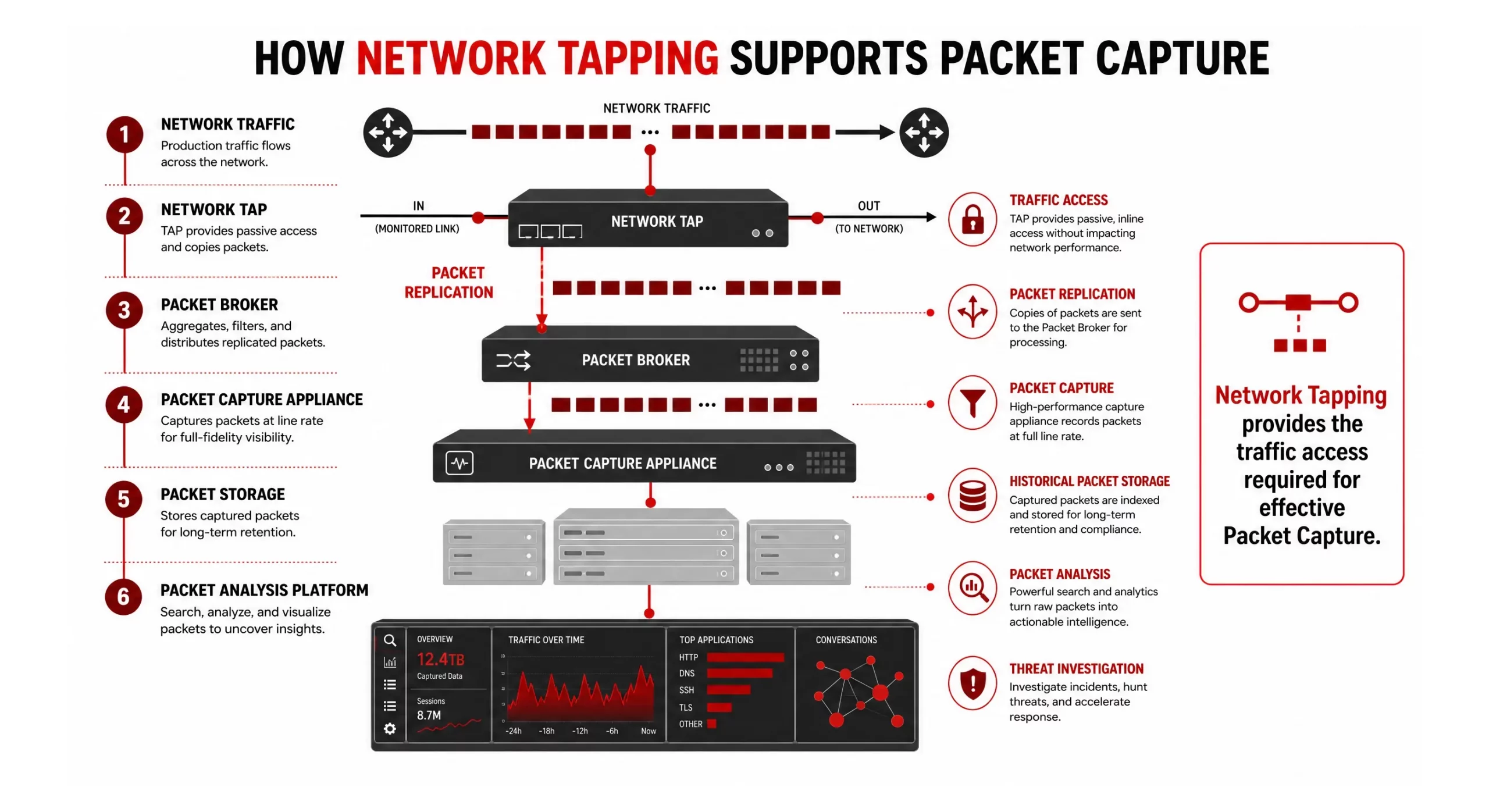
Diagram 5 : Network Tapping Supports Packet Capture
Network Tapping and Traffic Intelligence
Traffic intelligence transforms raw packet data into actionable insights.
Network tapping supports traffic intelligence by providing access to:
- Network communications
- User activity
- Application behavior
- Infrastructure interactions
- Cloud traffic
Organizations use traffic intelligence to improve operational awareness and cybersecurity effectiveness.
Network Tapping for Deep Observability
Modern organizations increasingly adopt Deep Observability strategies to gain deeper insights into network activity.
Deep Observability combines:
- Packet visibility
- Traffic intelligence
- Packet analytics
- Network monitoring
- Cloud visibility
- AI observability
Network tapping serves as the primary source of packet-level data required to support these initiatives.
Without network tapping, organizations may struggle to achieve comprehensive visibility across modern distributed environments.
Best Practices for Network Tapping
Deploy TAPs at Strategic Locations
Install Network TAPs at critical traffic aggregation points to maximize visibility.
Combine TAPs with Packet Brokers
Packet brokers improve scalability by filtering and distributing traffic efficiently.
Support Packet Capture Initiatives
Integrate network tapping with packet capture appliances and monitoring tools.
Monitor East-West Traffic
East-west traffic often contains valuable operational and security insights.
Align Visibility with Security Goals
Ensure network tapping deployments support cybersecurity monitoring, compliance requirements, and observability objectives.
Scale for Future Growth
Consider future traffic growth, cloud adoption, and AI infrastructure requirements when designing network tapping architectures.
Conclusion
Network tapping has become an essential technology for organizations seeking complete network visibility, stronger cybersecurity monitoring, and improved operational awareness.
As enterprise environments continue evolving through hybrid cloud adoption, AI workloads, distributed applications, and high-speed infrastructure, the need for reliable packet-level visibility continues to grow.
By combining network tapping with packet capture appliances, packet brokers, traffic intelligence platforms, and Deep Observability solutions, organizations can access critical traffic data, eliminate visibility gaps, improve threat detection, and gain the actionable insights needed to optimize network performance and security.
FAQs
What is Network Tapping?
Network tapping is the process of using a Network TAP to access and copy network traffic for monitoring, security, and observability purposes.
Why is Network Tapping Important?
Network tapping provides reliable packet-level visibility that supports network monitoring, packet capture, cybersecurity monitoring, and Deep Observability.
Is Network Tapping Better Than Port Mirroring?
For most enterprise monitoring and security applications, network tapping provides more reliable visibility and reduces the risk of packet loss.
How Does Network Tapping Support Packet Capture?
Network tapping delivers complete traffic streams to packet capture appliances, ensuring accurate packet collection and analysis.
What Tools Work with Network Tapping?
Network TAPs commonly integrate with packet brokers, packet capture appliances, security monitoring tools, traffic intelligence platforms, and Deep Observability solutions.
How Does Network Tapping Improve Network Visibility?
Network tapping provides direct access to network traffic, helping organizations monitor communications, troubleshoot performance issues, investigate threats, and gain comprehensive network visibility.